A Recent Production: Pittsburgh Job Corps
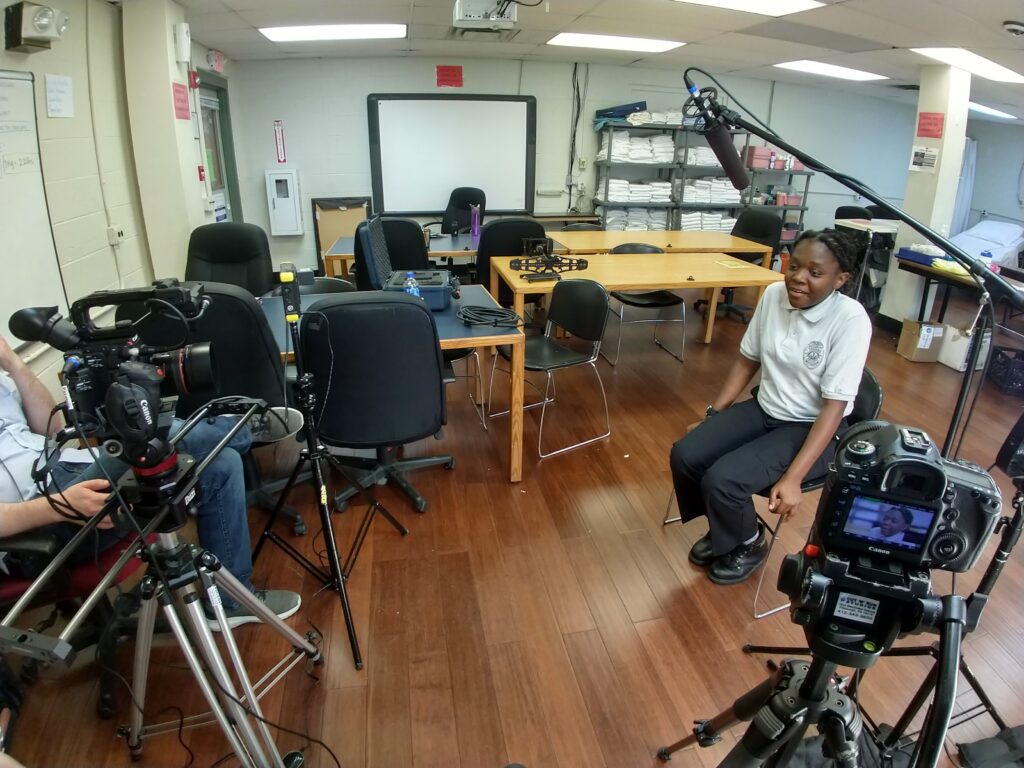
The Pittsburgh Job Corps needed a marketing campaign geared towards young adults looking to break into skilled trades and we were able to provide video content focused on recruiting new students. We used a Canon C200 accompanied by a 5D Mark III for our B cam to produce the content.
We recorded persons from all levels of the corps, ranging from students to staff. Shot entirely on location, our crew had to set up and strike multiple times throughout the day to shoot various scenes throughout the building. Some featured highlights included the carpentry and nursing departments.

Our video was prominently displayed on a large screen television they recently installed in a high-traffic public space on their campus. You can watch the video here: https://vimeo.com/354910036
Drones and the FAA Small UAS Rule
It’s a bird. It’s a plane. No, it’s a drone!
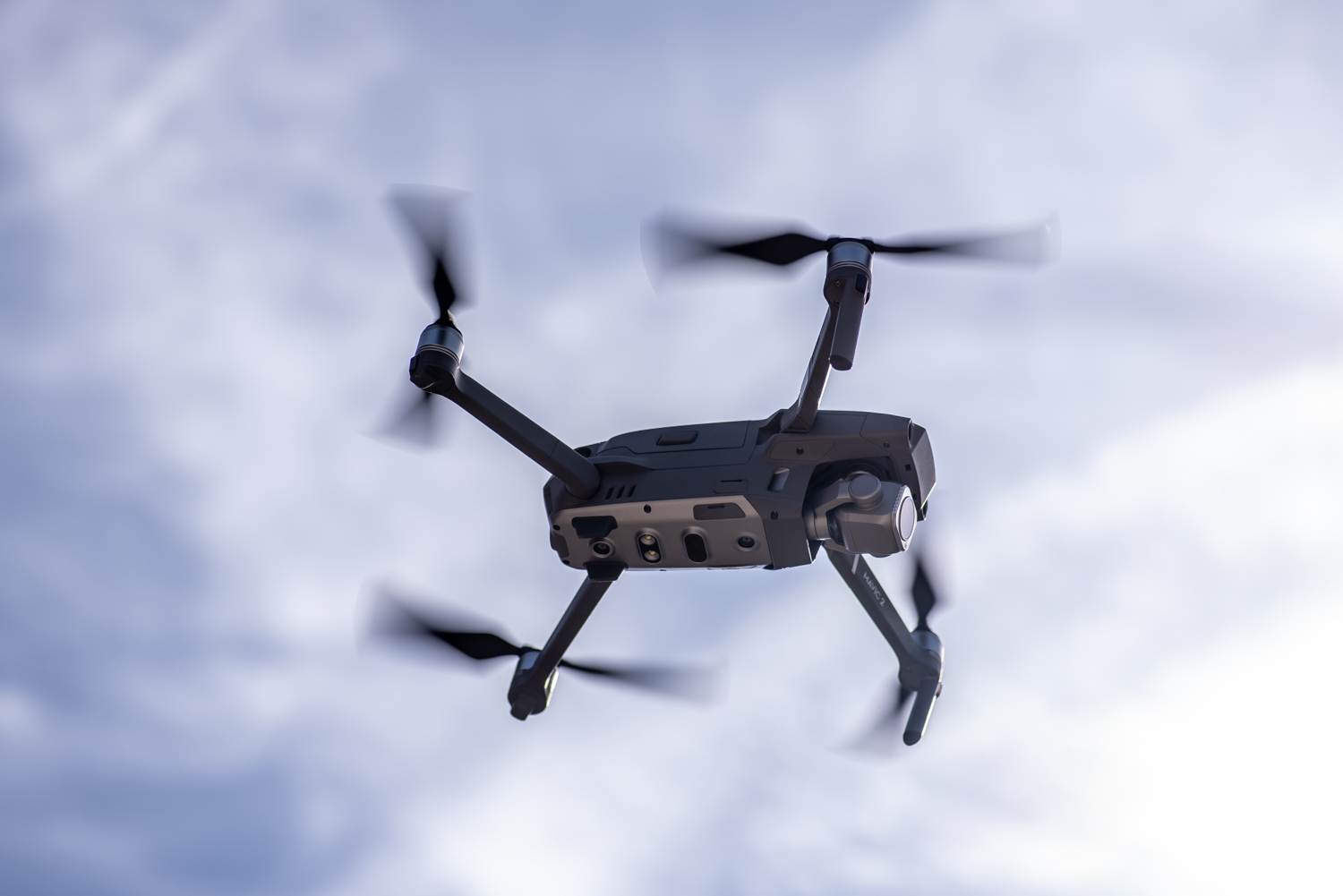
Drones are a hot topic, whether it’s the effectiveness and precision of military strikes, aerial photography/videography, mail delivery, or just ordinary consumer operations. For years, the FAA failed to issue appropriate regulations and guidelines for flying unmanned aircrafts in the United States. An issue that delayed commercial drone usage for businesses and professionals. Prior to the Small UAS rule, a 333 Exemption was required to fly drones along with a traditional pilot license. This created an impossible authorization process for those without a pilot license looking to solely operate drones. In addition, those with traditional pilot licenses were forced to wait 5-7 months in order to obtain 333 Exemption. The FAA finally addressed the these problems with the Small UAS Rule Part 107 which finally explains the requirements to fly a drone in the United States. Here are some of the highlights:
- Don’t overdue your accessories. The unit can only weigh 55 pounds.
- You must be able to see your drone device at all times.
- Airspace B, C, D, E require Air Traffic Controller approval. Airspace G does not!
- You cannot be in motion while operating a drone and you can only fly one at a time.
- Must have a Remote Pilot Airman certification with Small UAS rating or be under the supervision of of someone with this certification.
Check your equipment before flying. For more information and the full Small UAS part 107 visit https://www.faa.gov/uas/.
How Commercials Use Psychology to Win You Over
Most companies, brands, and commercial/marketing agencies are coming up with very unique ways to capture the attention of their audience through television commercials these days. I’m certain that you can recall specific commercials that stand out above the rest. Through the power of the rhetorical triangle, these branding techniques strategically market themselves to capture their intended audiences’ attention and create brand awareness.
What is the rhetorical triangle? It combines the elements of ethos (credibility and ethics), pathos (emotions and feelings), and logos (logic and reasoning) to influence a persuasive argument. Marketing agencies have long incorporated this ancient persuasive technique to get their message across very effectively.
It’s hard to find any commercial breaks without finding a brand or cause endorsed by a famous celebrity or role model. This is only one tactic of ethos. The brand rests assured in the hands of a trusted figure which helps force the viewer into a sense of trust and credibility. Think of the old Hanes commercials with Michael Jordan, or the popular Troy Polamalu (and now with the recent addition of NFL superstar quarterback Patrick Mahomes) Head & Shoulders commercials.
Doesn’t it feel more trustworthy when popular athletes with master hairdos suggest you try the hair product they’re endorsing?
The idea of pathos is to elicit emotions that will help sway the target audience or listener. One of the more powerful examples is the ASPCA commercial with sad and abused animals in shelters that need a good home while Sarah McLachlan’s “In the Arms of an Angel” plays. What’s sadder and more tear-jerking than that? Pathos can also be used in humorous ways, such as in cases of mistaken identity in Buick’s commercials. They feature people asking how they are going to fit in one model but the other actor stops them and shows them the right solution, a different model of their car.
Commercials that suggest a problem and then present a solution with their product or service are using the power of logos to push their message. This method of persuasion is more fact-based, scientific, and tangible. Lots of car companies are now advertising new safety features in their models because after all, isn’t safety everybody’s number one priority? Such examples incorporate a scenario where a distracted driver may be on a crash course but the car’s new safety feature kicks in, preventing the accident and potentially saving their life. Or, sticking with the car theme, Jeep is constantly pushing their message of superior capability compared to the rest of the competition.
These are just a few brief examples of how commercials use rhetoric to create persuasive advertisements to influence you to buy their products or services. The next time you watch T.V., pay attention to which method is being used in the commercials you watch. Knowing these tools will help you create a more convincing ad the next time you create a commercial, as well.
Understanding High Speed Sync (HSS)
If you have ever browsed studio strobes or even own a speedlite with the feature, you may have come across that term in its title, “high speed sync” or “hss”. Let’s take a minute to help you understand what that is and how to use it to your advantage.
Voluntary Parting–What It Is and Why You Need to Know About It
Here at Cut ‘N’ Run Studios, we like to focus on our craft–creating and producing wonderful content for the world to enjoy. However, sometimes we come across some important issues that need addressed that aren’t as glamorous as the latest gear and cool techniques.
Quick Thoughts On the New Canon EOS R System
As you may have heard, Canon just recently released its newest line of mirrorless camera systems known as the EOS R. I wanted to list my initial thoughts on the release and what it means for professionals and enthusiasts everywhere.
First off, if you are unfamiliar with the differences between a DSLR and a mirrorless camera, do some research to find out the key differences. They do not have a physical mirror that blocks the sensor from recording information until you press the shutter release button as you do in traditional DSLR systems. I won’t get into the details in this post but I encourage you to check them out to see what kind of system works best for your needs.
Within the past ten plus years, the most major players in the photography world have been Canon and Nikon and just recently Sony stepped up their game with their various “a” series mirrorless cameras. It is no secret that Sony got a lot of things right with their cameras which have caused long-time users of Nikon, Canon, and other companies to jump ship and switch to Sony. Both Canon and Nikon didn’t have a whole lot to offer in the means of mirrorless systems, especially not at a comparable level to what Sony could offer. Naturally, they had to do something or else they were going to fall behind–fast.
Nikon and Canon both released new mirrorless systems which are now capable of competing with what Sony has been doing for years. Since we primarily shoot with Canon cameras in house and rent higher-end cameras with the EF mount, I will be discussing my thoughts on Canon’s EOS R system. With it being so new and unavailable to most of the public right now, it is hard to really say how it performs using a hands-on test. On paper, however, it appears that there is a lot to love.
For starters, let’s just talk about the price. The body alone is listed at $2,299 USD. Compared to another one of Canon’s recent and great cameras, the 5D Mark IV, it’s nearly a thousand dollars less. That’s also less than one some of Sony’s flagship cameras such as the Alpha a7R III ($2,998) and also their a9 (+$4,000). They all share similarities but again, not to deviate far from the subject, I want to focus on Canon here.
Boasting a 30.3MP sensor, the EOS R is small and mighty. One huge feature is that it is full-frame where one of Canon’s predecessor mirrorless cameras, the EOS M, has a cropped sensor. The sensor technology is more advanced too, giving more processing speed and power, allowing for more burst photos without reaching the buffer. Another huge improvement over its predecessors is that it shoots at a 4K resolution at various frame rates between 23.98 to 29.97 fps, and can also shoot up to 120 fps but at a 720p resolution. Similar to the
Video shooters can rejoice that it now offers internal stabilization, something that Sony’s cameras have been doing for quite some time already. Additional features that look good on paper is that it now supports Wi-Fi, Bluetooth, and has a ton (5655 to be exact) of autofocus points. Covering 88% of the viewing area, you will be hard pressed to miss focus very much. I like that it has a flip out screen which has been seen on other models like the 80D. That helps with shooting above or below your head and also for recording yourself if you do podcasts or the like. It also shoots stills faster than some of its DSLR brothers and sisters, shooting at 8 fps. The 5D Mark IV, for example, shoots slightly slower at 7 fps. Also similar to the 5D IV, you can record video in the C-Log color space for more dynamic range and color grading versatility.
What might sell people on staying with Canon instead of switching to Nikon or Sony could very well lie in one factor: their lenses. Canon has long been the king of glass and although the new system has a new mount (RF instead of EF), they include optional adapters so you can use your fabled lenses on your new body. They are, of course, still going to create high-quality glass with the native RF mount, but at least with the adapters you won’t need to completely overhaul your gear to compensate. Another thing I like about the mounts (three announced at this time) is that it gives additional features and functionality to the body which otherwise wouldn’t be possible. For example, one of their mounts includes slots for filters such as neutral density.
As with just about everything in life, there are some things not to love about this new camera, but the list is rather small for me at this time. First of all, there is only one slot for a memory card where the 5D series offer two. However, it supports UHS-II SDXC cards with extremely high read/write speeds. The only tradeoff here is if you need more storage and don’t have time to swap out cards but rather change which card, that is already inserted, you want to record to. In most cases, this will not be an issue, but there’s always a first for everything. Also, according to other sources online, the lenses are huge in comparison to the body. This might not be so bad if you enjoy having that weight in your hands but it just might look a little silly.
It’s a good thing Canon is trying to compete with Sony and also that Nikon is doing the same. One of the biggest criticisms I’ve heard about Canon and Nikon is that they haven’t really done anything too revolutionary in a long time. They also weren’t doing much to compete with Sony and if that trend continued, I would see no reason to continue shooting on anything but Sony since they were making so many technical advancements so quickly. For now, I am just excited to see some real-world use with the new EOS R system and am looking forward to Canon’s future.